
Biogas Market Data
Biogas in America 2026
Download our annual industry data report
What is a biogas system?
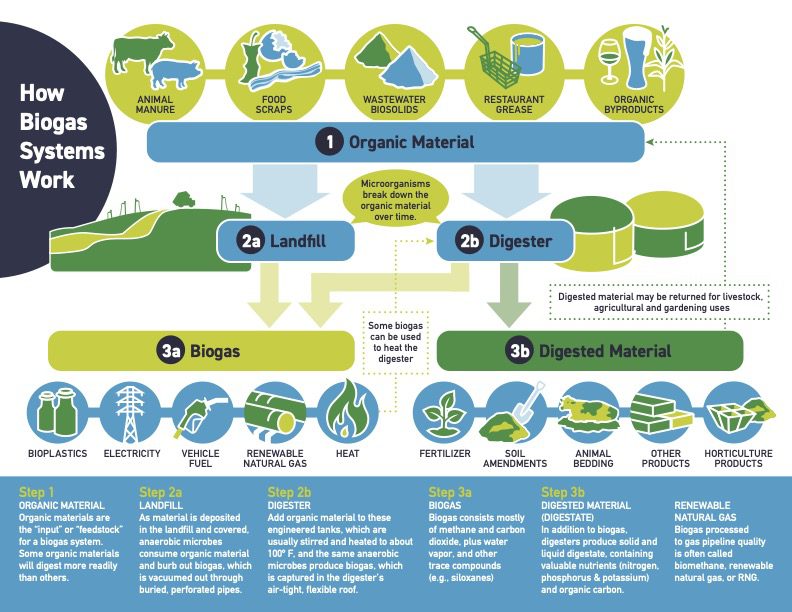
Biogas systems use anaerobic digestion to recycle organic waste, turning it into renewable energy (the gas or “biogas”), and valuable soil products (liquid and solids or “digestate”), using a natural, biological process. After simple processing, biogas can also become a renewable substitute for natural gas, used any of the ways conventional natural gas is used. And at the same time, the digested materials—the liquid and solids—can be turned into a wide variety of useful soil products: similar or identical to peat moss, pellets and finished compost. Biogas systems can also recover nutrients, helping to protect waterways from runoff, and prevent over fertilization.
What counts as organic waste? Manure from dairies, sludge filtered from sewage water, municipal solid waste, food waste, yard clippings, crop residues and more.
Operational US Biogas Systems
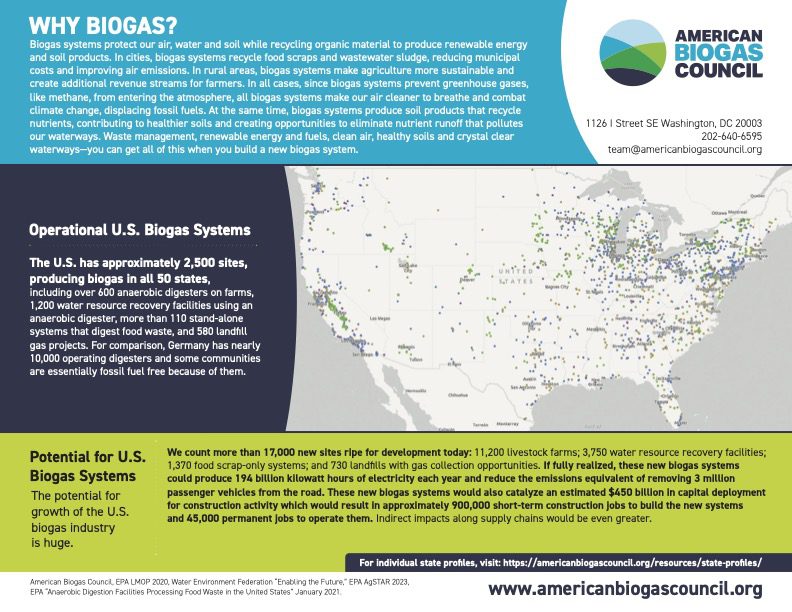
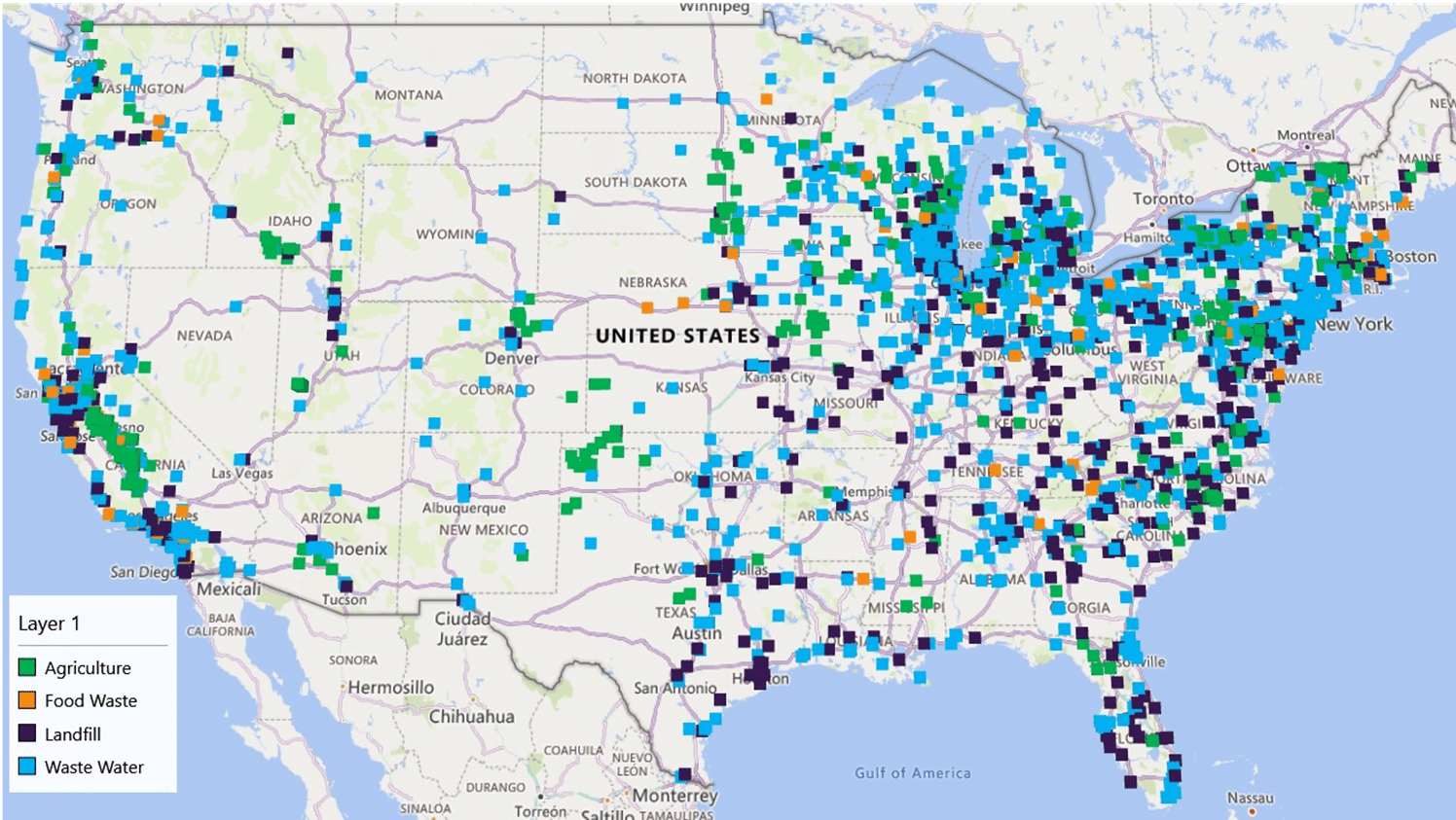
The U.S. has approximately 2,600 sites producing biogas in all 50 states. There are 631 farms with biogas capture systems, over 1,240 water resource recovery facilities using an anaerobic digester, 121 stand-alone systems that digest food waste, and 598 landfill gas projects, representing an estimated $39.8 billion of capital investment. For comparison, Germany has nearly 10,000 operating digesters and some communities are essentially fossil fuel free because of them.
Potential US Biogas Systems
The potential for growth of the U.S. biogas industry is huge. We count over 17,000 new sites ripe for development today: at 11,205 dairy, poultry, and swine farms; 3,750 water resource recovery facilities, 1,370 food scrap-only systems, and at 730 landfills with potential to utilize gas collection. If fully realized, these new biogas systems could produce 25 Gigawatts of electricity each year and reduce the emissions equivalent of removing 3.4 million passenger vehicles from the road. These new biogas systems would also catalyze an estimated $450 billion in capital deployment for construction activity which would result in approximately 900,000 short-term construction jobs to build the new systems and 43,000 permanent jobs to operate them. Indirect impacts along supply chains would be even greater.
Find more detail on biogas in the 50 states here
Sources: American Biogas Council Biogas Projects Database, EPA LMOP 2024, EPA AgSTAR 2024, ReFED Food Waste Monitor 2023, EPA 2019 Food Wasted Report April 2023.
Last updated March 2026.